There is a specific kind of freedom that comes from closing your laptop after a productive Tuesday and immediately stepping out into the vibrant, sun-drenched streets of a Mediterranean city. You aren’t on vacation; you just live there.
For years, the digital nomad community hacked their way across Europe, bouncing between Schengen zones, dealing with the anxiety of expiring tourist stamps, and living out of short-term rentals. Then, the Spanish government introduced the Spanish Digital Nomad Visa (DNV), turning the dream of a long-term Spanish basecamp into a legal reality.
But before you can navigate the paperwork, you have to answer the most exciting question: Where are you going to live?
Spain is incredibly diverse. You can surf in the Atlantic, ski in the Pyrenees, or get lost in the medieval streets of a bustling metropolis. To help you choose, we sat down with Lucía Lagunas, lead immigration expert at My Spain Visa. Lucía’s team has successfully transitioned hundreds of remote workers from temporary tourists to legal Spanish residents.
Based on the actual relocation data from their clients, combined with insights from the global remote work community, here is the definitive guide to the top spain digital nomad cities, followed by the exact legal and tax hacks you need to make your move permanent.

Choosing Your Basecamp: Top Spain Digital Nomad Cities
When searching for the perfect destination, remote workers look for a delicate balance: reliable high-speed fiber-optic internet, a welcoming expat community (preferably with a strong English-speaking presence to ease the transition), great weather, and a solid cost of living.
For a quick overview, here is how the top destinations stack up against each other:
Top Cities for Remote Workers Summary
| City | Best For | Cost of Living | Key Feature |
| Barcelona | Culture & Networking | High | High-speed internet & premier tech hub |
| Las Palmas / Tenerife | Nature & Year-round Sun | Low/Moderate | Affordable coastal living & surf culture |
| Malaga | Tech & Sunny Beach Life | Moderate | Strong tech community & 300 days of sun |
| Valencia | Balanced Lifestyle | Low/Moderate | Relaxed coastal & urban mix, highly cyclable |
| Madrid | Networking & Cosmopolitan | High | Capital city amenities & corporate connections |
| Seville & Granada | Authentic Culture | Low | Incredible value & historic architecture |
| Tarifa | Extreme Sports & Windsurfing | Moderate | Bohemian vibe & world-class kitesurfing |
Tip: While large cities have abundant coworking spaces, you can use specialized sites like Coworker to find community hubs anywhere from Madrid to Tarifa.

Here is a deeper dive into where the smartest nomads are settling in 2026.
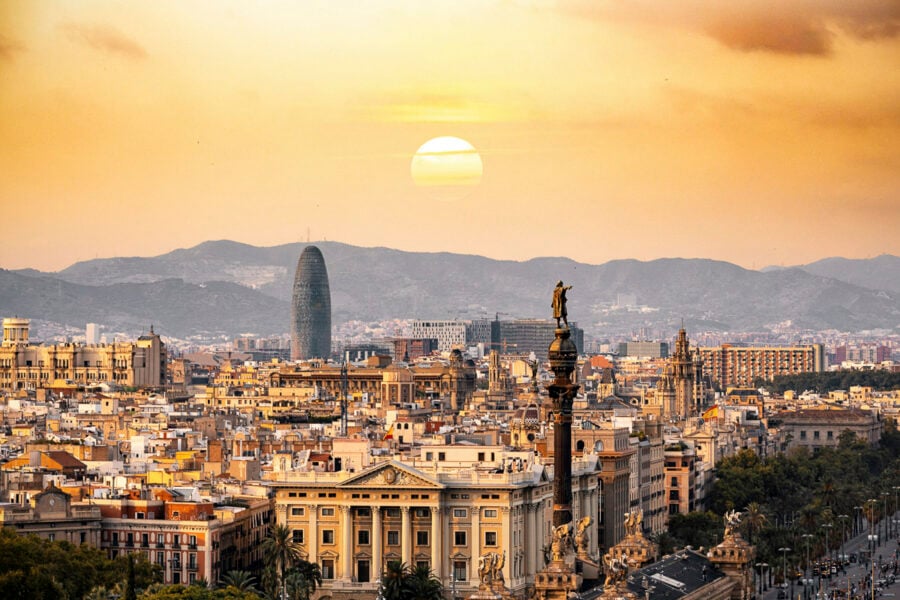
1. Digital Nomad Barcelona: The International Tech Hub
Despite rising housing costs, the allure of the Catalan capital remains undeniable. The quintessential digital nomad barcelona experience involves working from a chic cafe in the Gothic Quarter before heading down to Barceloneta beach or networking at high-end coworking spaces like Aticco or OneCoWork.
- Best For: Culture, networking, and a vibrant nightlife.
- The Vibe: Barcelona is one of Europe’s premier tech hubs. If you are looking to network with other tech professionals, developers, and creatives, this is the place to be. The scene is incredibly international; you can easily live here for years speaking only English.
- The Reality Check: It is one of the most expensive options in Spain. The cost of rentals keeps increasing, leading many nomads to look at coliving opportunities or move slightly out of town to coastal areas like Maresme, which offers a quick train commute (Cercanías) to the city center. Additionally, because the bureaucracy here can be saturated, having a legal team navigate the local extranjería (immigration office) is practically mandatory to avoid massive delays.

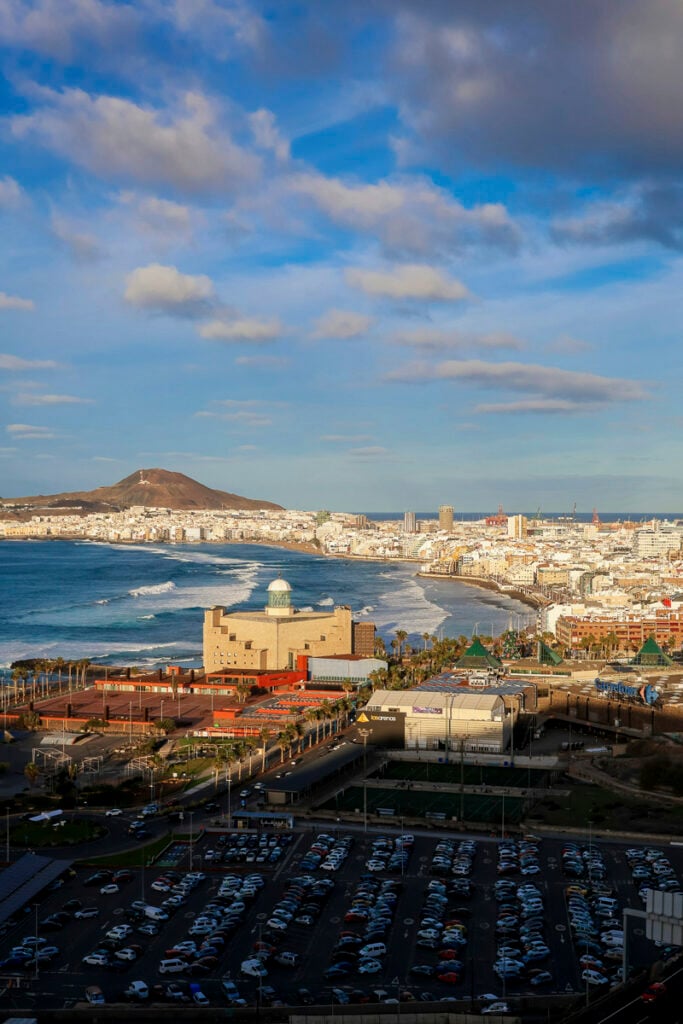
2. Digital Nomad Las Palmas & Tenerife: The Island Escape
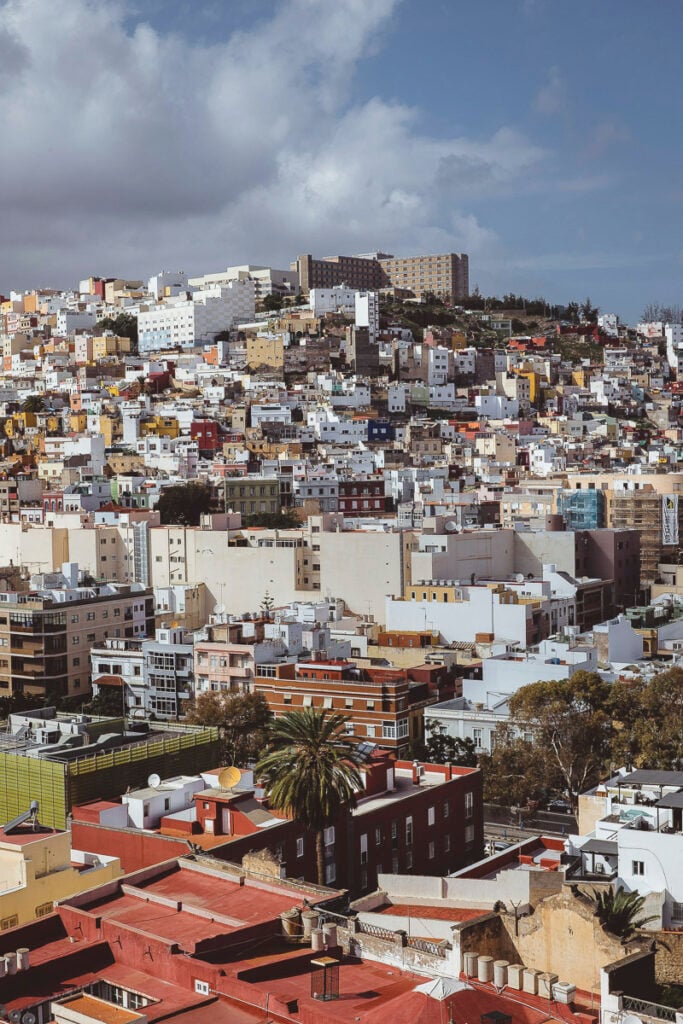
If you want to escape winter entirely without leaving the European timezone, you head to the Canary Islands. The digital nomad las palmas community on Gran Canaria, along with the growing hub in Santa Cruz de Tenerife, is arguably the most established remote work tribe in Europe.
- Best For: Year-round sunshine, nature, and a budget-friendly coastal lifestyle.
- The Vibe: Las Palmas is a proper, bustling Spanish city flanked by world-class surf breaks like La Cicer. Tenerife, the largest island, offers stunning landscapes from beaches to the Mount Teide volcano. It’s the perfect blend of natural beauty and reliable infrastructure.
- The Reality Check: “Many of our North American and Northern European clients specifically request the Canaries,” Lucía notes. “The appeal of finishing a workday at 4 PM and grabbing a surfboard is universal. It truly is the ultimate nomad city gran canaria experience.” The cost of living is noticeably lower here than on the mainland, and the VAT equivalent (IGIC) is only 7%, making eating out and socializing incredibly affordable.
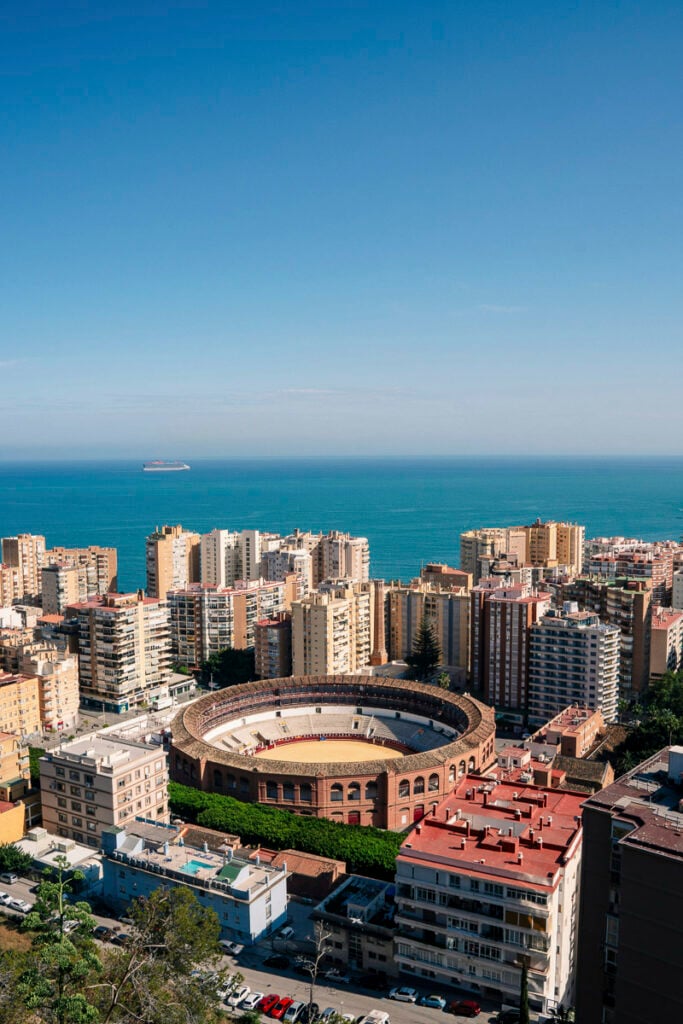
3. Digital Nomad Malaga: The Sunny Tech Boom
Over the last five years, Malaga has undergone a massive transformation. Once viewed simply as the gateway airport to the Costa del Sol, it is rapidly growing into a European tech hub, fueled by massive investments from companies like Google.
- Best For: Sun, tech community, and a balanced cost of living.
- The Vibe: The rise of the digital nomad malaga scene is undeniable. Malaga offers 300 days of sunshine a year, high-end housing, an incredibly friendly local Andalusian culture, and fantastic connectivity via its international airport and the high-speed AVE train. Life centers around the historic center, the revitalized Soho district, and miles of beautiful coastline.
- The Reality Check: While it offers a lower cost of living than Madrid or Barcelona, prices are rising as its popularity booms. If you find the city center getting too pricey, towns along the Costa del Sol offer a quieter alternative.
4. Digital Nomad Valencia: The Balanced Lifestyle
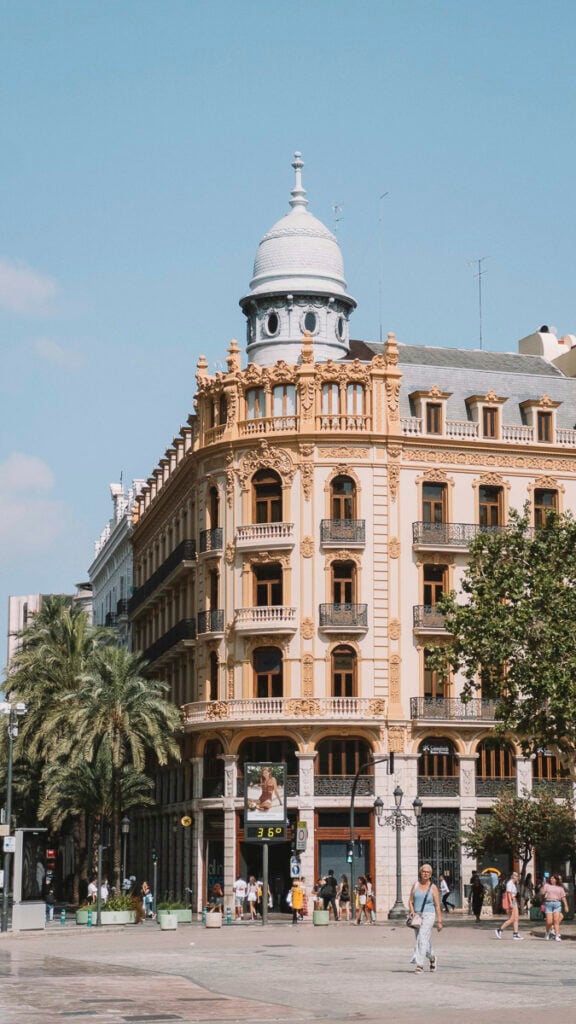
In recent discussions across nomad forums, Valencia consistently wins the title for the “Best Balanced Lifestyle.” A massive chunk of clients looking for a digital nomad valencia lifestyle cite the perfect mix of affordability, a relaxed beach-town vibe, and urban amenities.
- Best For: Affordability, cycling, and a relaxed coastal-urban mix.
- The Vibe: Valencia offers everything the bigger cities do—stunning beaches, incredible food, historic architecture—but at a fraction of the cost and without the overwhelming tourist crowds. The city is flat and highly cyclable, boasting the beautiful Turia Park.
- The Reality Check: For the remote worker, co-working spaces are abundant in neighborhoods like Ruzafa and El Cabanyal. The internet is blazing fast, the expat community is highly organized with weekly meetups, and many nomads find they can live very comfortably here on €1,500 – €2,500 per month.
5. Digital Nomads Madrid: The Cosmopolitan Capital
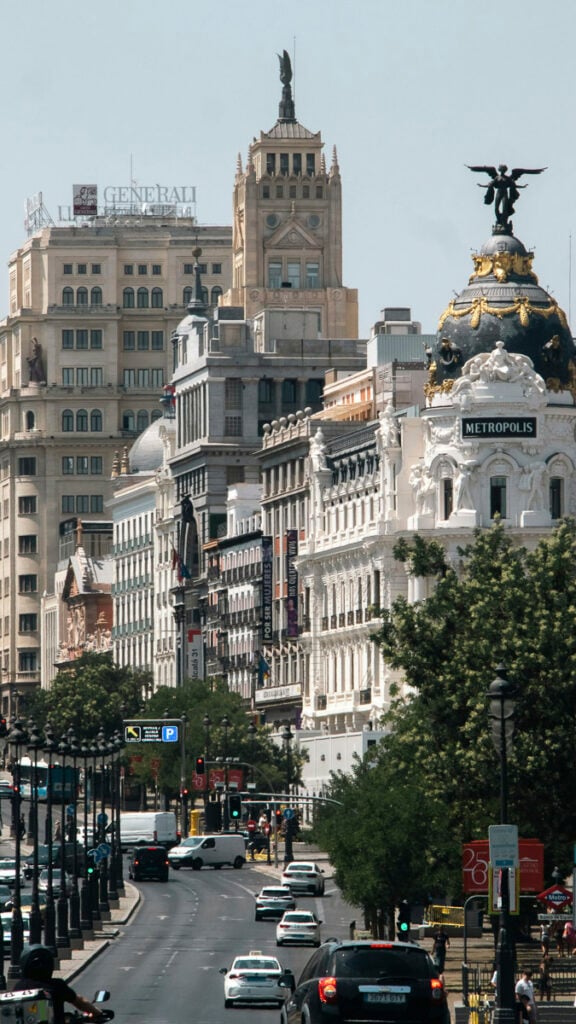
Not every nomad wants the beach. For those who thrive on metropolitan energy, world-class museums, networking, and a nightlife that literally never stops, the capital calls.
- Best For: Networking, major corporate connections, and intense urban life.
- The Vibe: For digital nomads madrid offers an unmatched level of connectivity. It’s a massive cosmopolitan hub with world-class coworking spaces like Impact Hub. The Adolfo Suárez Madrid-Barajas Airport offers direct flights almost anywhere, making it perfect for those who travel for client meetings.
- The Reality Check: While it is more expensive than Valencia or the islands (comparable to Barcelona), Madrid makes up for it in opportunity. Neighborhoods like Malasaña, Chueca, and Chamberí are packed with laptop-friendly cafes. The clients who choose Madrid are usually higher-earning consultants or startup founders who want to be in the economic center of the country.
6. Seville & Granada: The Authentic Andalusian Value
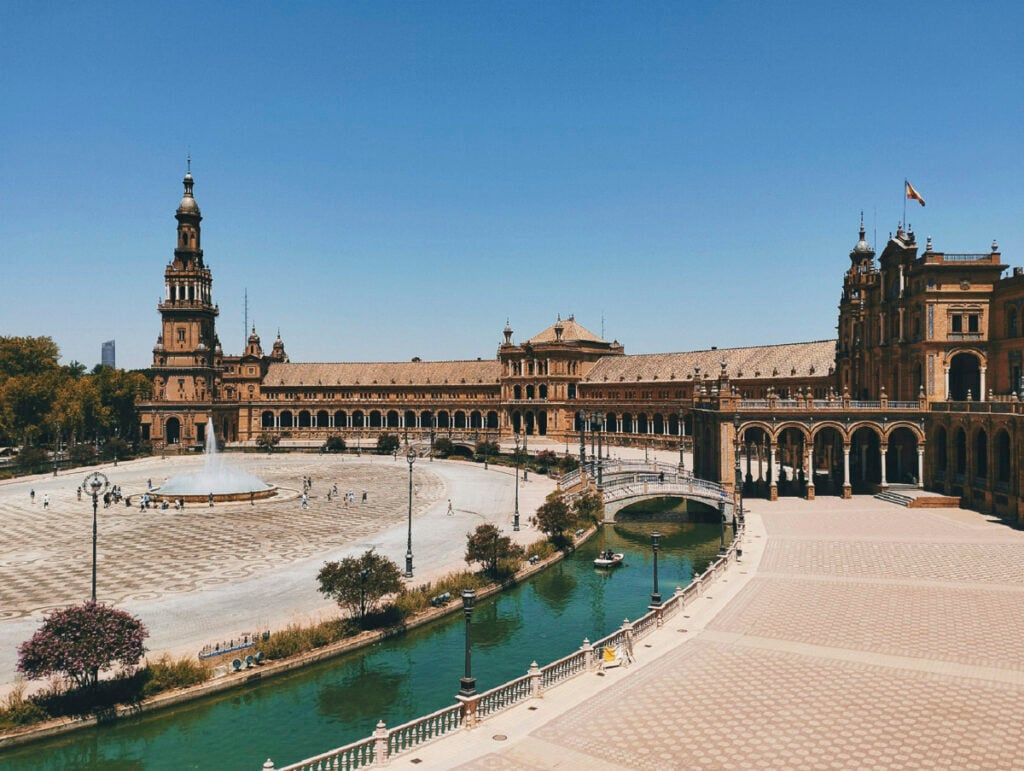
For nomads seeking a deeply authentic Spanish experience away from the massive international crowds, the inland Andalusian cities are hidden gems.
- Best For: Authentic culture, artistic vibe, and incredible value for money.
- The Vibe: Seville offers a growing startup scene, stunning Moorish architecture, and lower living costs. Granada attracts creatives with its striking contrasts—the Alhambra, the backdrop of the Sierra Nevada mountains, and free tapas with every drink.
- The Reality Check: These cities are best enjoyed from October to May. The hot summers from June to September are notoriously tough, even for locals, and coworking spaces (like AndaCowork in Granada) are less abundant than in the major tech hubs.
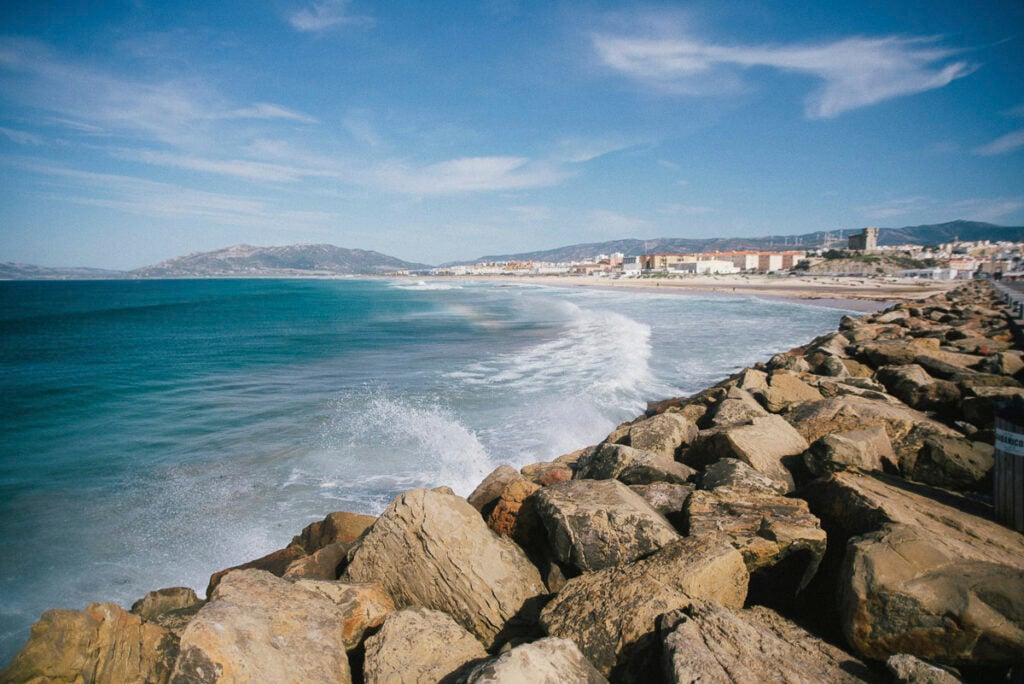
7. Tarifa Digital Nomad: The Windsurfer’s Secret
Located at the absolute southernmost tip of mainland Spain, where the Mediterranean Sea meets the Atlantic Ocean, you will find Tarifa.
- Best For: Surfers, extreme sports enthusiasts, and a bohemian lifestyle.
- The Vibe: The tarifa digital nomad tribe is a unique breed. This town is the windsurfing and kitesurfing capital of Europe. It has a distinctly laid-back vibe that attracts a younger, highly adventurous remote worker.
- The Reality Check: While it doesn’t have the massive infrastructure of Madrid or Barcelona, the community has built fantastic boutique coworking spaces right off the beach (like La Cocotera). It gets very busy in summer, but for sports enthusiasts who work from a laptop, there is literally nowhere better.
Making It Reality: The Spanish Digital Nomad Visa
Now that you’ve picked your dream city, how do you legally stay there?
The Spanish Digital Nomad Visa is designed for non-EU nationals who work remotely for companies based outside of Spain, or freelancers who have clients globally. But as thousands of remote workers quickly discover, the gap between a government announcement and actually navigating the Spanish bureaucratic labyrinth is massive.
According to Lucía Lagunas, the initial excitement often turns into panic when applicants see the paperwork. “Spain is incredibly welcoming, but the administration demands precision,” Lucía explains. “A single missing stamp on a background check, or an improperly translated financial statement, can trigger a denial.”
The Core Requirements (Updated for 2026)
The Spanish government wants to ensure you are self-sufficient. Here is what you need to prove:
1. The Financial Threshold: You must prove a stable, consistent income. One of the most common questions Lucía receives is about the exact Spain digital nomad visa minimum. For a single applicant, you generally need to show earnings of at least 200% of the Spanish Minimum Interprofessional Wage (roughly €2,600 to €2,800 per month). This amount increases slightly if you plan to bring your spouse or dependents.
2. The Remote Work Proof: Employees need a letter explicitly granting permission to work remotely from Spain from a company operating for at least one year. Freelancers must prove a track record of freelance work with foreign clients.
3. The Paperwork Trail: You need comprehensive private health insurance operating in Spain, a perfectly clean criminal record (apostilled and translated by a sworn Spanish translator), and proof of your professional qualifications.
The Application Hack: Tourist vs. Consulate
Here is an insider secret that Lucía shares with all her clients at My Spain Visa: where you apply changes everything.
If you apply at the Spanish embassy in your home country, you will be granted a 1-year visa. But, if you enter Spain legally on a standard 90-day tourist visa and apply directly from within the country via the UGE (Unidad de Grandes Empresas y Colectivos Estratégicos), you are granted a 3-year residency permit straight away.
“Almost all of our clients choose to enter Spain first,” notes Lucía. “We prepare the entire dossier while they are packing up their lives. They fly into their chosen city, enjoy their first tapas, and we hit submit on the application digitally. They get three years of residency right out of the gate.”

The Secret Weapon: The Beckham Law
Getting the visa is only half the battle. The other half is dealing with the taxman. Spain is notorious for its high, progressive tax rates, which can reach up to 47% for high earners.
This is the exact moment when contacting a specialized lawyer like Lucía Lagunas pays for itself tenfold. The secret is transitioning your approved Digital Nomad Visa into the special tax regime known colloquially as the Beckham Law.
“Many nomads don’t realize that simply getting the visa means you become a standard Spanish tax resident,” Lucía warns. “Without applying for the special tax regime within six months of arriving, you are subject to standard progressive taxes on your worldwide income.”
By applying for this regime through My Spain Visa, eligible digital nomads are taxed at a flat rate of just 24% on Spanish-sourced income up to €600,000, and are generally exempt from Wealth Tax on assets outside of Spain. This special status lasts for six years, resulting in massive tax savings. “We handle the DNV application, and the moment it is approved, we immediately begin the Beckham Law application,” says Lucía. “It’s a package deal for peace of mind.”
How to Guarantee Your Visa Approval
Knowing where you want to live is exciting. Gathering apostilled police records and navigating the Spanish tax code is not.
Attempting a DIY application often leads to endless frustration and rejected apostilles. If your documents are older than 90 days, they are invalid. If your translation isn’t sworn, it is rejected.
“We see people who tried to apply on their own, got denied due to a technicality, and have to leave the Schengen zone in a panic,” Lucía Lagunas shares. “Our job is to completely remove that stress. We review every single document before you even book your flight. When we submit your application, we already know it is bulletproof.”
If you are serious about making Spain your basecamp, the smartest investment you can make is in professional guidance. You focus on deciding between the cafes of Valencia or the beaches of Las Palmas; let the experts handle the paperwork. Hundreds of successful digital nomads use the dedicated legal team at My Spain Visa to fast-track their application, officially translate documents, and guarantee approval without the stress.
Ready to trade the rat race for a Mediterranean lifestyle?
Connect with Lucía Lagunas and the expert team at myspainvisa.com today to start your guaranteed Digital Nomad Visa application process.